

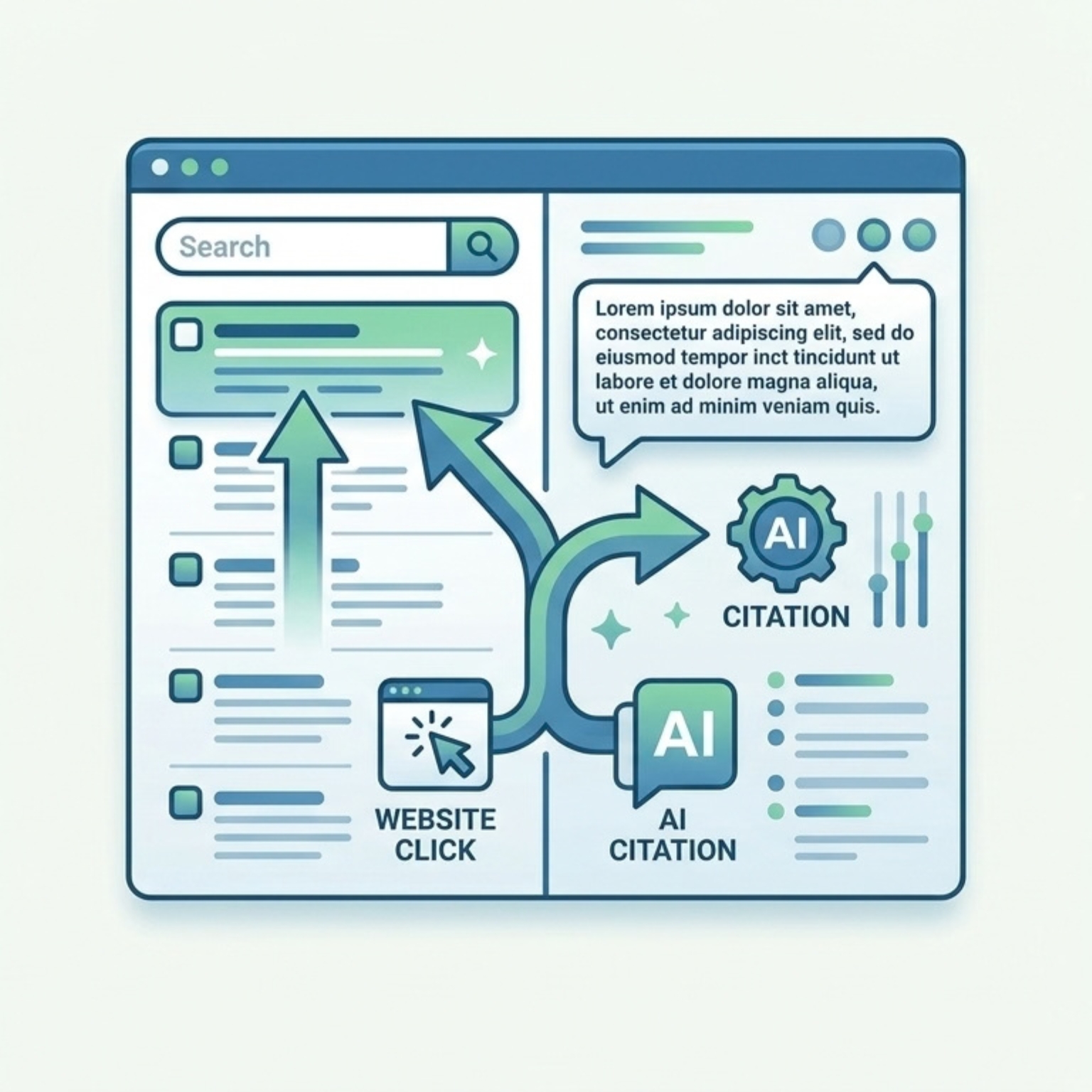




SEO (Search Engine Optimization) positions your website among the top organic results on Google and Bing. It represents the ideal strategy for GEO and SEO for businesses.
Through technical optimization and keyword research, SEO reaches people who are searching for your services. This way, SMEs can attract qualified traffic, generate targeted leads, and build strong brand authority in their market.
GEO (Generative Engine Optimization) is the evolution of digital visibility. It targets Artificial Intelligence search engines such as ChatGPT, Perplexity, and Gemini.
Combining GEO and SEO for businesses allows you to go beyond a simple list of links. In fact, GEO gets your company cited directly in the summary answers generated by AI. This way, virtual assistants recognize your brand as a reliable and authoritative source for B2B searches.
Both strategies improve your company’s online visibility. However, applying GEO and SEO for businesses requires a different approach:
Goal: SEO aims for clicks to your website. GEO aims to get your brand cited in AI answers.
Content: SEO uses specific keywords. GEO requires structured data, citable sources, and direct answers to complex problems.
Measurement: In SEO, you track rankings and organic traffic. In GEO, you measure your brand’s presence in AI summaries.
At TechMucho, we support B2B SMEs in building a modern digital presence. We offer integrated GEO and SEO solutions for businesses.
We build strong local and industry SEO foundations for your website. At the same time, we structure your content so it is easy for generative AI models to understand. We ensure complete multichannel visibility for your company, effective on both Google and AI platforms.